Showing posts with label meat. Show all posts

Sunday, 23 July 2023

Would You Eat Cultivated Meat?

What the heck is cultivated meat?! The Future Food? Imagine meat that has no pathogens - no salmonella, no e coli. Imagine meat that is grown without animals existing in obscenely cruel conditions. Imagine a meat that has a lower carbon footprint. Imagine a meat with no growth hormones.

Churchill imagined it in 1931...

Fifty years hence, we shall escape the absurdity of growing a whole chicken
in order to eat the breast or wing,
by growing these parts separately under a suitable medium.”

Far-sighted man was Churchill. He just had the timing wrong...

Cultivated meat is also known as cultured meat, cell-based meat, artificial meat, and designer meat. It's here. Whether it catches on is the next question. 

Cultivated meat, is meat that is grown in a laboratory... well... actually... more like a brewery. Animal cells (let's say chicken) are taken and grown with amino acids in massive bioreactors (like a brewery vat). When the meat is ready, it comes out looking like minced meat and is then shaped and formed into chunks of "meat". The cells that are used can be from any part of the animal, even feathers.

But... I can hear you now... does it taste and feel like meat? Or is it going to taste like one of those regurgitated McNuggets? Generally... taste testers admit that it does taste and feel like real meat. The meat balls can be a bit "denser" than regular meat balls. But the flavour is bang on - "full and savoury".

There are huge environmental benefits to this form of ethical meat. But there are some caveats. These processing plants... or meat breweries... use a large amount of energy. As long as they are using renewable energy sources - hydroelectric or solar or wind - then the carbon footprint is much lower than your massive chicken factory/barn. But... if they are using fossil-fuel generated electricity... they have a bigger carbon footprint than traditional meat.

And right now... the serum in which the cells are grown is FBS - Fetal Bovine Serum. And yes, a calf fetus gave up its nascent life to contribute its life blood to "slaughter-free" cultivated meat. Bit of an oxymoron there.

Will this actually become a mainstream "thing". And how much does it cost?

The FDA just approved (23 June 2023) the sale of cultivated meat in the USA (CNN article). So it is here. And if you live in the states, you could potentially find "lab grown" meat on your alternative grocery store shelves.


As for the costs... the first lab grown steak cost $300,000 to make. But costs have come down since then. The first of anything is always going to be expensive. After that, economies of scale "should" bring prices down. Remember... the first computer cost $$$$$ and now... few hundred bucks.

But there are some serious questions about how cultivated meat can be scaled to be affordable. Right now... a kilogram of lab grown meat costs about $20,000. That would make for an expensive burger. And trying to get it down to the range of $17/lb or $40/kg... well... there's the kicker.

There would need to be some huge technological advancements and a shift in resources for this to be viable on the large scale. But maybe... as climate change pushes us forwards... we'll make those choices. Or maybe cultivated meat will just be a exclusive experience for the uber-rich.

Remember Thomas Watson, the president of IBM? In 1943, he famously said "I think there is a world market for maybe five computers."

So... who knows what the future brings. I'd like to remain on the optimistic side. Cultivated meat would solve so many issues... as long as it doesn't create more problems.

And then there is the burning question... would YOU eat cultivated meat? Would consumers actually want this stuff? I know I would eat it. In moderation of course. 

More Reading

The Counter - Article about the huge problems facing cultivated meat - 9 Sept 2021
The Scientist - Removing the Animals from lab-grown Meat - 9 May 2023


Monday, 15 February 2021

Millions of Animal Lives Wasted due to Brexit and Covid

One meat exporter from the UK said last month that he had 30 tonnes of pork rotting in Rotterdam, held up by paperwork. All thanks to Brexit. And he's not the only one. Another exporter said he had five containers held up with 23 tonnes of meat in each container (115 tonnes in total). But all they're really concerned about is their bottom line... their profits.

It all sounds so clinical... pork, meat, produce, goods... although the word "rotting" should wake us up to the fact that this isn't just a waste of food. It's a waste of lives.

Your average 300 lb hog will generally produce 130 lbs of usable pork. So let's do some math:

  • 1 tonne = 2204 lbs

  • 30 tonnes = 68,138 lbs
  • 115 tonnes = 253,532 lbs

  • 30 tonnes or 68,138 lbs divided by 120 lbs of meat/pig = 525 pigs
  • 115 tonnes = 253,532 lbs divided by 120 lbs of meat/pig = 1950 pigs

Soooo... just two British meat exporters have raised and killed roughly 2500 pigs for nothing. What a hideous, horrible waste of lives. And this is likely just the tip of the iceberg. There are many, many more meat exporters (chickens, pigs, lamb) as well as seafood exporters who have had to dump thousands of tonnes of meat/seafood because of paperwork issues with the new Brexit export/import regulations.

One official from the British Meat Processors Association (BMPA) said that more than 120 lorries carrying British meat were stuck at Rotterdam. Let's say 23 tonnes/lorry (according to one news article) =  2760 tonnes. More than 50,000 animal lives wasted. And some of those lorries might have pork... but some might have lamb or even chicken. Which would mean many, many more lives/tonne since chickens weigh a lot less than pigs...

Perhaps it's time to rethink the whole meat industry thing... after all, a shipment of dried lentils or beans can sit for days or weeks and be no worse for it. Just saying. Eating meat is a luxury...

Covid

And I don't even want to think about the 17,000,000 (million!) mink that were "culled"... exterminated? slaughtered? Let's just say killed... in Denmark because of Covid. Not all of those mink were sick with a Covid variant, they decided to exterminate/eliminate/execute their entire mink farm populations just to be on the safe side. That's an unfathomable number of animals.

How do you even kill that many animals within the space of a few days? Gassing them with carbon dioxide apparently... but it can be problematic because mink are semi-aquatic animals and can hold their breath for long periods which means that after 30 seconds of gassing... they might not all be dead.

Why the heck does Denmark even have so many mink? Because they are the world's largest producer of mink pelts, producing over 19,000,000 pelts every year (over a billion dollars). Who buys that many mink pelts?? China. It's a luxury item, see. Wearing a mink fur coat denotes status and wealth. I tend to lean more towards the idea that it denotes cruelty, inhumanity and sheer horror. But hey, that's just me.

Of course, European fur farms are better regulated than fur farms in China, which should perhaps make us feel a bit better. At least in Denmark, the animals are killed by gassing before being stripped of their skins. In China, they simply stun the animals with blows to the head (or grab them by the hide legs and whack their heads on the ground), hang them upside down and then skin them starting at the hind legs. They then pull the pelt down the body and off the head. And yes, the animals are still alive during this process and some wake up while being skinned. Some still have beating hearts and eye movements five to ten minutes after being skinned alive. All that suffering so some rich person, or wanna-be-rich person, can have the luxury status-symbol of a fur coat.

Every once in a while, when I think about having a steak or some garlic prawns... I just have to remind myself of how that steak was raised... and of how the prawns are harvested... and I don't really want steak or prawns anymore.

Friday, 22 January 2021

The Very Good Bean Butchers

Bean Butchers? Yep, they're a thing. Butchering poor harmless little beans, all so that we can eat something that looks like meat, tastes like meat but... ain't meat. Even though it's butchered. What a cool idea... and apparently a wildly popular and growing trend.

For a while now, I've been aware The Very Good Butchers. They are expert bean butchers and created various meat-free alternatives using beans, organic veggies and vital wheat gluten (a.k.a. seitan). They are a relatively local company (120 km away in Victoria) which is always nice. Go local!

I know that technically this is a variation of processed food but... it also seems like their ingredient lists are fairly clean. There aren't any weird preservatives and... well... I've been wanting to try them for a while. Our local health food store carries some of their items, mostly sausages, but the VGB site has a few other intriguing products: taco stuffers, BBQ Jackfruit (say what??), Ribz, burgers and even Stuffed Beast (also comes unstuffed).

Big Butcher Box
top row - Pepperoni, BBQ Jackfruit, Ribz
middle row - Taco Stuffers, Smokin' Burgers, Burgers
bottom row - Very British Bangers, Smokin' Bangers

I was poking around their website in mid December and many of their items were sold out, including the Stuffed Beast. The Beast gets rave reviews even from meat-eaters sooo... one of these days we may give that a try. But for now... we decided to dip our toe into the water and try one of their Butcher Boxes... For $112 (including courier shipping)... we get:
  • 2 packs of Very Good Burgers
  • 1 pack of Smokin' Burgers
  • 1 pack of Smokin' Bangers
  • 1 pack of Very British Bangers
  • 2 packs of Taco Stuff'er
  • 1 pack of BBQ Jackfruit 
  • 2 packs of Ribz
  • 2 packs of Pepperoni

The burgers and sausages are obvious... but what does one do with the taco stuffers? And the Jackfruit stuff? Fear not... The Very Good Butchers have some recipe ideas on their website as well. Nice.

We used to get a butcher box (real meat) from Twin Rivers Meats via the local Hospice Society (a fundraiser for them) soooo... this is not all that different in quantity or variety. And it will give me some more stuff to track in the freezer app! It's not like we are going to be having these things every day... maybe once a week... just to see how it goes. It's all a grand experiment

Although... if they ever get bought out by Big Food... we'll be taking our business elsewhere. There's a difference between supporting a small artisan business where you know you are getting quality vs being at the mercy of Big Food and their tendency to value profits over quality. I read that The Very Good Butchers went public on the Canadian Stock Exchange this past year. This might be explained by The Very Good Butchers making an appearance on the Dragon's Den two years ago! They0 had five Dragons vying for a slice of their business. Fascinating... Time will tell if quality still trumps share-holder profits.

Wednesday, 30 September 2020

But... do you get enough protein?

Powerful Protein

One of the biggest questions/worries/comments I get as a non-consumer of animal protein is... "Where do you get your protein? Do you get enough protein?" It's an old argument and one that isn't entirely accurate. You see... most North Americans get more than enough protein... but there is no need to hit 100 grams of protein/day. Actually... 50 grams of protein/day is enough for the average woman and 60 grams of protein/day for the average man. If you're an ultra-marathoner, you might need more... but that's not me...

 So... where do I get my protein? Let's look at an average meal plan:

Breakfast (standard)

  • oatmeal (rolled oats) (1/2 cup dry) - 6 grams of protein
    • walnuts (1 oz) - 6 grams of protein
    • berries ( 1 cup) - 1 gram of protein
    • cinnamon (1 tsp) - 0.1 grams of protein
    • hemp hearts (1 Tbsp) - 4 grams of protein
    • ground flax seed (1 Tbsp) - 1.3 grams of protein
  • soy milk (1 cup) - 7 grams of protein
  • baked beans (1/2 cup) - 6 grams of protein
    • nutritional yeast (2 Tbsp) - 11 grams of protein

Let's see... 6+6+1+0.1+4+1.3+7+6+11= 42.4 grams of protein... just for breakfast.

Just to compare... scrambled eggs (3 eggs) and bacon (6 slices) have 13 grams of protein (and 0 grams fibre). Add two pancakes for another 5 grams of protein (and 0 grams of fibre). And a glass of 2% milk for 8 grams of protein (and 0 grams of fibre). We're even! Yay! But then... we'd have to talk sugars and saturated fats and... well... I don't think we want to go there today. You get the picture I think... Gram for gram... I can meet the protein requirements. And no... we don't supplement with protein powders... we don't need them. If ever we become marathoners... we'll supplement with protein powders...

Oh... and in case you're wondering... you've likely heard that animal proteins are considered "complete" proteins which means they have all the amino acids that we need. A one stop shop, so to speak. The terms "complete" and "incomplete "are a bit misleading though. Plant-based foods also contain all of the amino acids we require, just in slightly different proportions. All that means is that we need to eat a mixture of plant-based foods (not just rice and beans)... a varied diet... some legumes, some whole grains, some soy products, some nuts.

And no... soy products do not mess with your estrogen... that's another fallacy. Eating three servings of soy products/day (every day) is perfectly fine.

Another interesting tidbit... our bodies can only absorb 25 to 40 grams of protein at one sitting... so it's important to spread out our protein consumption. If we eat too much protein (like half a chicken - 80 grams of protein)... it gets stored as fat... and the excess amino acids get excreted...

Anyhow... back to my average daily meal plan...

Lunch (an example - the salad is standard... the "main" dish varies)

  • salad
    • dark leafy greens (2 cups) - 6 grams of protein
    • tomatoes (100 grams) - 1 gram of protein
    • cucumber (50 grams) - 0.4 grams of protein
    • radishes (2 medium) - 0.2 grams of protein
    • grapes (1/2 cup) - 0.2 grams of protein
    • kohlrabi (1/4 cup) - 1 gram of protein
  • red lentil curry on top of farro
    • red lentils (1/2 cup cooked) - 9 grams of protein (protein powerhouse!)
    • onions & tomatoes in curry - 0.5 grams (guesstimate)
    • farro (1/2 cup cooked) - 4 grams of protein (better than rice - same as quinoa)

Let's tally up lunch - 6+1+0.4+0.2+0.2+1+9+0.5+4= 22.3 grams of protein

So... let's see... that's... 64.7 grams of protein for breakfast and lunch. Boom... mic drop.

Protein for an herbivore ain't a problem if... IF... you eat a whole food, plant based diet. Toss in a bunch of white bread and pizza dough and potatoes instead of the oatmeal, soy milk, beans, nutritional yeast, dark leafy greens, lentils and farro and... the protein falls through the floor.

Fabulous Fibre

The bigger issue is Fibre... Our daily fibre requirement is in the neighbourhood of 30 grams/day... from food... not from supplements. The average North American gets 15 grams of fibre per day... and over 97% of Americans do NOT get enough fibre.

Let's bee clear... meat/fish/dairy/eggs have a great big whopping 0 for fibre. We're not talking about muscle fibres... those are not dietary fibre.

Fibre comes from plants... it's what allows plants to defy gravity and hold their shape. And our gut biomes love fibre, both the soluble and the insoluble types, and if you want anything... you want to keep your little gut biome happy...

Sooo... how does my breakfast and lunch stack up in the fibre department?

Breakfast (standard)

  • oatmeal (rolled oats) (1/2 cup dry) - 4 grams of fibre
    • walnuts (1 oz) - 2 grams of fibre
    • berries ( 1 cup) - 3.6 grams of fibre
    • cinnamon (1 tsp) - 1.4 grams of fibre
    • hemp seed (1 Tbsp) - 0.4 grams of fibre
    • ground flax seed (1 Tbsp) - 1.9 grams of fibre
  • soy milk (1 cup) 1.5 grams of fibre
  • baked beans (1/2 cup) - 7 grams of fibre
    • nutritional yeast (2 Tbsp) - 2.5 grams of fibre

Let's see... 4+2+3.6+1.4+0.4+1.9+1.5+7+2.5= 24.3 grams of fibre... just for breakfast.

Lunch (an example - the salad is standard... the "main" dish varies)

  • salad
    • dark leafy greens (2 cups) - 6 grams of fibre
    • tomatoes (100 grams) - 1.5 grams of fibre
    • cucumber (50 grams) - 0.2 grams of fibre
    • radishes (2 medium) - 0.1 grams of fibre
    • grapes (1/2 cup) - 0.2 grams of fibre
    • kohlrabi (1/4 cup) - 2 grams of fibre
  • red lentil curry on top of farro
    • red lentils (1/2 cup) - 8 grams of fibre
    • onions & tomatoes in curry - 0.5 grams of fibre (guesstimate)
    • farro (1/2 cup) - 2.5 grams of fibre

Let's tally up lunch - 6+1.5+0.2+0.1+0.2+2+8+0.5+2.5=21 grams of fibre

So... that's 44.3 grams of fibre for breakfast and lunch.

And yes... we do eat our main meal at lunchtime. It dovetails better with the body's circadian rhythm. There's nothing worse than eating in the evening... particularly within four hours of bedtime.

So... what do we have for our evening meal? That varies. Some evenings, I'm just not hungry so I don't eat anything. Some evenings I'll have a few tablespoons of hummus with some veggie sticks (peppers, carrots, cukes, kohlrabi). Some evenings I'll have some peanut butter and mashed berries on top of a slice of pumpernickel style bread. All of which boosts my protein and fibre intake even more.

Sooo... a whole food, plant based diet more than ticks the boxes for protein and fibre. Still not convinced... look at a cow or a bison or a horse or a rhino or an elephant and ask yourself... these strong, muscular herbivores... where do they get their protein from?

Saturday, 26 September 2020

Shroom Leather and... More...

Shroom leather shoe on shrooms
From Material District & sold for €583(!)
on Nat-2


Leather made from mushrooms? Wait... what? Yes, it's true. No longer do we need to kill animal to use their skins for shoes, handbags, wallets and jackets. No... now we can use mushrooms.

I really couldn't quite believe it... because on this journey of divesting myself of food and accoutrements that harm animals... I struggled with the whole leather shoes thing. They are just more comfortable, more resilient, more moldable than those plasticized shoes. And, if you get a really good pair of leather shoes, they can last a decade or more. Sigh, I still miss my Mephistos... best shoes ever.

Now... I don't go through shoes like some people go through kleenex... when I find a pair of shoes that I like, I buy them and keep them. And I am not in competition with Imelda Marcos' closet. I have maybe 10 pairs of footwear:

  1. Merrell hikers
  2. Blundstone half-boots
  3. Danish walking shoes
  4. Columbia sport sandals
  5. Winter boots from Mark's Work Wearhouse
  6. Rubber boots for the garden
  7. Crocs for the garden
  8. water shoes

Huh... is that it? I should go check... nope, that's it... And, when one pair of shoes is nearing the edge of its lifespan, I go and buy myself an equally good pair of shoes. Same brand, same make if possible. My feet know what they like and... as I have learned... keep your feet happy and the rest of you will be happy as well. At least out hiking and walking.

Soooo... mushroom leather... what gives with that?

Cute mushrooms and their sub-surface
network of Mycellium

First, there is Mylo, a type of leather made from the mycellium of mushrooms, that's their underground network of threads that connects the larger mushroom organism. I guess I should mention that a mushroom is not just the fruiting body that you see on the surface of the group... your typical mushroom. Nope... there is way more going on underground than we can even imagine. And the mycellium acts as kind of a super highway underground, connecting trees and the wider sub-surface ecosystem. It's quite amazing. And they Mylo stuff, which they are careful not to call "leather", since it really isn't leather, which is made from animal hides, grows in a matter of weeks and uses way less water (for example) than growing a cow would. Waaayyy more eco-friendly.

Then, we have Muskin, also made from mushrooms, but the cap of the Phellinus ellipsoideus mushroom, an inedible shroom native to subtropical forests. Same idea... same shroom leather idea... Apparently they have also tried making leathers out of pineapple and apple scraps. Go figure.

So, I guess the question is... how do we make our voices heard to demand a switch from animal leather to shroom leather? And, yes, I know that animal hides are a byproduct of the meat industry soooo.... maybe we need to ease up one the meat consumption first... thereby reducing the supply of animal hides... thereby creating space and demand for shroom leathers. Makes sense to me. 

OK... so ready to have your mind blown?? Take a look at this picture... Nice looking steak, eh? Looks like a steak, smells like steak, feels like a steak, chews like a steak and... tastes like a steak... BUT...

A Meati steak

Is NOT a steak! Nope. Not a steak. I know... I am drooling too... but this is made from Mycellium. Yep... shroom meat... in this case, a company called Meati. Mycellium for this steak grows overnight... Read more on the Meati website... And... it comes as beef and chicken varieties too... No artificial ingredients. No GMO. And... is high in fibre (that's good) and a protein as well. What's not to like about this? Alas... so far, Meati is only available in Colorado... have to be patient... The Mycellium grows in fermentation vats overnight and the amount of Meati that can be produced is way, way more efficient than livestock farming. Meet Mycellium Meati... it's the wave of the future folks...

Now... we just have to wait for the prices to come down...

Fast Company has a nice overview article of Mushroom Leather

Fast Company also has a nice overview of Meati

Thursday, 9 July 2020

The Great 2020 Meat Give-away

We gave away all of the meat in our freezer yesterday. We had been holding onto it during the height of Covid-19, just in case, you know, the entire society collapsed and we ran out of beans and needed to trade meat for canned tomatoes, or something. But... the meat is getting a bit old in there now (+6 months) soooo... it's time to let it go.

I never thought it would come to this. We have been holding to a whole food plant based eating plan (not a diet) for the last 6 months and... it's been going remarkably well. Far better than I had expected. As a dyed in the wool carnivore... I didn't expect it to be this easy but... it has been. Oh sure, we have our slip-ups... like milk chocolate. Trying to avoid all animal protein products can be a bit of a challenge - and yes, that includes, eggs, dairy and fish. For example, we are currently using up the last mayonnaise jar in our fridge. It seemed a waste to just toss it... and so we use it up. But we won't buy any more egg-based mayonnaise once this jar is done. But we haven't  slipped up elsewhere - no meat, no fish, no cheese, no milk, no yogurt. We're still alive and it seems unlikely we are going to return to the carnivore/omnivore camp soo... it was time to let go of the meat.

We asked a senior couple if they would like to have our meat and they leapt at the opportunity. So yesterday, they cam over with a small cooler... not quite big enough for what we had in the little freezer. Luckily, they were headed straight home after their shopping bonanza so a rubbermaid tote with blankets served as a substitute cooler. What did they leave with?
  • 1 whole chicken
  • 1 double rack of baby back ribs
  • 1 salmon
  • 2 fillet of sole
  • 10 zip-loc bags with two chicken breasts in each bag
  • 6 packages of sausages
  • 2 packages of bacon
  • 4 burger patties
  • 1/2 bag of prawns
  • 2 shoulder blade roasts
  • 4 pork tenderloin
And, voila, our little freezer was almost empty! Which is a good thing because... it's raspberry season.... and blackberry season isn't far behind. In a good year, we can have quite a haul of frozen berries in our freezer... Not to mention the fall harvest of apples cooked into apple sauce. Oh sure, we could can the apple sauce but sometimes... it's just easier to freeze it.

Soo... win-win situation - our meat went to a good home and we now have freezer space for food items more suited to our plant based palate.

Friday, 24 April 2020

In the News - Food Security

For years, I've read about "Food Security"... and how, living on an island as we do, we should look at building up our food security. I have to admit, I've never really looked into it all that much, I just took it to mean that most of our food comes from "away" and, in any sort of a disaster, we'd be stuck. Huh.

Now that we're in a pandemic disaster... food security is front page news and... it means a lot more than just where the food comes from. Here's a definition from one local organization...
When a community is food secure, all of its citizens have dignified access to affordable, good-quality, nutritious food. While this may seem simple enough to achieve, the effects of globalization, the rising costs of real estate, and growing income disparity, are all conspiring to disconnect the average citizen from the source of their food.

As people lose the ability and skill to grow and prepare their own food, they become dependent on distant suppliers, out of season produce, and processed foods. In short, the source of their food is not secure and the quality is compromised.
Now that makes a lot of sense. It's not just where our food comes from (distant vs. local suppliers) but what sort of food we access (processed vs. fresh), when we access it (in or out of season) and how expensive it is to access (affordable or expensive). On top of that... with many people relying on restaurants, fast-foods, junk foods and/or the ever popular TV dinners... cooking has fallen by the wayside. And let's not even talk about vegetable gardening which, to many people, is a complete mystery. Then... of course... there's preserving food from the bountiful garden harvests - freezing and/or canning... which is another deep mystery.

In many ways, food security means us (me and you) getting as close to fresh food as possible and eliminating as many of the middle men/women as possible. So many different ways of doing that...
  • shopping the perimeters of grocery stores - produce, meat, dairy, bread - and skipping the processed/junk food in the middle aisles
  • shopping at farmer's markets and buying locally grown
  • growing our own food - even herbs on a balcony is a step in that direction or maybe it's a plot at a community garden
  • foraging for food - blackberries are an obvious first choice on the Coast...
  • gleaning for food - people post when they have excess produce (e.g. an over-abundance of apples) and gleaners come and pick it and then distribute it to food banks, etc.
Seems pretty simple and low-key until we toss Covid-19 in to the mix... and then all of a sudden food security becomes front page news and a burning topic of discussion. Let's see...

There is, of course, a common denominator in all of this... the meat processing plant staff work elbow-to-elbow in very confined quarters. It's easy to see how a virus could spread quickly. And... the foreign workers are housed in very crowded quarters... again, easy to see how a virus could spread quickly. Wherever we have living beings crammed close together, it's going to make it really easy for any disease to take off... be it in pork processing plants or in dairy herds or fur farms or any meat market where live animals are sold for consumption.

British Victory Garden poster
On top of that... we have the United Nations warning us that the future could bring famines of "biblical" proportions in more than 10 countries. These countries are already teetering on the edge due to war, drought, locust plagues (I kid you not) and/or economic hardship. It won't take much of a push from the Covid-19 virus to tip them over the edge.

It's enough to give one the heebee jeebees... So, what's a person to do? After all, I can't fix what is happening, or going to happen, in Ethiopia... or anywhere else in the world. I really only have influence in my little corner of the world, all 8200 sq ft of it to be exact.

A few blogs ago, I wrote about the idea of Victory Gardens... an idea from the Second World War. I'm not the only one... type in "virus victory garden" and be prepared to be overwhelmed by a tonne of news articles about gardening taking off...

As it turns out, some cities are taking an active role in encouraging individuals to grow food. Victoria, BC, for example, voted to grow more food plants in the cities nurseries, rather than flowers. The food seedlings would then be delivered to individuals in need, who would continue to grow them.

Brampton - Backyard Garden Program
Brampton, ON, has taken it a step farther and started the Backyard Garden Program in which they are giving away free seeds and soil. This is a step beyond what Victoria is doing! Because, let's face it... most people don't know the first thing about growing vegetables. And while seeds do work for many things (carrots, beets, peas, etc)... it can be tricky if you're a first time gardener. The soil... the water... the location... all play a role. The good thing seems to be that there is always someone in the neighbourhood who knows something about gardens... I was reading this one article about an amateur gardener from Vancouver. Her neighbours are wanting to get on board with gardening... even though they've never done it... but at least they have the amateur gardener to dispense helpful advice!

I've also come across the idea that more cities should be planting fruit and/or nut trees instead of ornamental trees. While I'm not sure how this would work along city boulevards (pollution and a morass of fallen apples in the fall)... it certainly would be a good idea in parks and along walking paths. A few years ago, I was in Winnipeg, and came across their Public Orchard at The Forks... a nice little grouping of fruit trees and berry pushes which anyone can pick or harvest. Cool idea!

So, there is some hope out there... and it all begins with some small steps. When we started our vegetable garden... we started with one raised bed... which became two the following year... and so it's gone. This year, we added three small beds along the sunny side of the house. Just another few small steps.


Monday, 10 February 2020

The Price of Animal Protein

Environmental Impact of the Livestock Industry
Livestock farming produces more greenhouse gas emissions than the entire transportation sector (planes, train, ships, cars).

When I read that in a scientific report, I was stunned. The biggest difference I could make in helping the planet was not by trading in our fossil fuel vehicle for an electrical vehicle. No, the biggest difference would be cutting out animal protein - not just meat, but dairy and eggs as well.

I struggled with that. As a carnivore, I've been in a constant state of negotiation the last few months. Maybe we could cut out meat and keep dairy and eggs? Maybe?

The thing is... it's not just the greenhouse gas emissions... it's the amount of water used, it's the pollution generated and... it's the health impacts on humans as well.
  • 30% of the planet's ice-free surface is used for livestock production - that includes all the land used to raise feed crops for livestock.
  • 75% of the world's agricultural land is devoted to livestock production
  • 40% of the planet's fresh water is used in livestock production. One kilogram of beef requires 15,000 litres of water. That one hamburger from A&W used 2000 litres of water.
  • The average American eats 240 lbs of meat/year. The average Bangladeshi eats 4 lbs of meat/year. The global average is 80 lbs/year.
  • All of those resources produce only 18% of the calories that we eat
This is huge... but I could try and argue that we need protein soooo... it's a necessary evil? Nope... that one is shot out of the water as well. Most of us exceed the daily recommended allowance of protein. In fact, only 3% of Americans have a protein-deficiency. Most of us get more than enough... in fact... most of us get more than enough JUST from eating the plant-based foods in our diet. Yup, plants contain protein... and if we eat a moderately balanced diet... even without animal protein... a protein deficiency is not the problem.

Meat is the new Tobacco
The real kicker for me was to learn this little tidbit which often gets buried under a bunch of misinformation from American lobby groups (cattlemen's association, dairy farmers, egg producers...). Ready?

Eating animal protein has been linked to higher incidence of:
  • heart disease (clogged arteries)
  • diabetes (surprise... sugar is not the primary culprit)
  • cancer (including breast, colorectal and prostate)
  • osteoporosis (go figure)
  • infertility (erectile dysfunction is one of the biggest indicators of heart disease)
  • obesity (wow)
And it's not just because some meat is high in saturated fat. Oh no... it's the actual animal protein and the heme iron contained in animal protein. So "lean" meat like chicken doesn't sidestep this argument... nor do dairy or egg products. Basically, eating animal protein (from whatever source) increases inflammation and cholesterol in the body. And processed meat is exceedingly bad (bacon, hotdogs, salami, ham, etc. - sigh, good-bye salami).

That woke me up because I'm dealing with high cholesterol. I was cutting out red meat because it was high in saturated fat. And watching what oil we used for cooking. But... if I really want to get a grip on it... I'm going to have to step up my game. Cause there is no way I want to go on a statin... they've got serious issues.

And so... I say goodbye to animal proteins. I had planned to "eat the freezer" and clear out the chicken, ribs and sausages that we had purchased before our light bulb moment. But at this point... I really don't think that's in my best interests. So we are going to canvas our friends and see if they want to have any of our disease-generating animal protein.

My LDL over the last 5 years - vertical axis is: Low - Mean - High - scary zone
My LDL over the last 5 years - vertical axis is:
Low - Mean - High - scary zone
At the end of September, my cholesterol numbers were as follows:
  • Total Cholesterol - 7.1 (normal is 2.00 to 5.19)
  • LDL Cholesterol - 4.98 (normal is 1.50-3.40 - this is the bad cholesterol)
  • HDL Cholesterol - 1.48 (normal is > 1.19 - this is the good cholesterol)
  • Trigylcerides - 1.40 (normal is < 2.21)
I'm going to get tested again at the end of February because... you see... their is some good news and hope in all of this. The human body is an amazing thing and... people have reduced their cholesterol significantly after just one week on a whole-food plant-based diet. I'm going to give it a bit longer than that... just to add some buffer.

Canada's latest food guide - looks different, eh?
I told my doctor that we are moving towards a plant-based diet and reducing/eliminating meat consumption and he rolled his eyes at that. He argues that the only diet shown to have a benefit is the Mediterranean diet. That's fine... but I also spoke with my nutritionist at the hospital and she heartily supports the plant-based diet. Given that most doctors get less than 8 hours of nutrition education... I think I'll go with the nutritionist on this one.


I'm kind of amazed at the realisation that eliminating animal protein from our diet can benefit:
  • our health - heart disease, diabetes, cancer, osteoporosis, etc
  • the planet's health - land degradation, water, pollution, greenhouse gas emissions
  • animals - at least 480 lbs (240 lbs x 2) worth out of the 50 billion animals killed every year
  • our pocketbook - meat is darn expensive... especially the healthier cuts
That seems like a triple WIN to me... I realize that we are just two people but... that is two Small Steps in a different direction. Our capitalist society runs on supply and demand... Usually, the marketing boffins convince us that we need to increase our demand of whatever thing they are supplying/selling... But what if we actually made a different choice and reduced our demand. Theoretically this is a two-way street and we can make a difference... Remember...
Never doubt that a small group of thoughtful, committed citizens can change the world; indeed, it's the only thing that ever has. (Margaret Mead)

And... stay tuned for my updated blood work at the end of the month.


P.S. While our whole-foods (NOT processed), plant-based diet may look vegan, I'm not calling it vegan. There is a lot of stuff that is attached to that word... do we have leather shoes, belts, notebooks, couches? And there are a lot of people out there happy to act as the Vegan Police and point out all sorts of offenses and slip-ups...

P.P.S. What about iron, vitamin B12, Omega-3 and other possible nutritional deficiencies? Stay-tuned for another blog post. I will leave you with this tidbit... Remember that only 3% of Americans have a protein deficiency? Well 97% of Americans have a fiber deficiency... and fiber is only found in plants... and is essential for our little gut biome... but that too is another blog post!

Wednesday, 29 January 2020

A Carnivore's Epiphany on the Road to Hanoi

My Carnivore Pedigree
I have long been a happy carnivore. For as long as I can remember, I have loved meat, with a few notable exceptions...
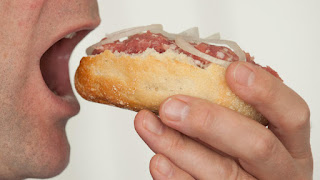
German delicacy - Rohes Hackfleisch
German delicacy - Rohes Hackfleisch on bread
When I was growing up, my Mom believed in trying to expand the culinary palate of her children (my sister and I). We were introduced to such enticing delicacies as liver and onions, kidney with gravy, blood sausage (the one with big chunks of fat in it) and rohes Hackfleisch (a German dish similar to steak tartare).

The only way my sister and I could choke down the blood sausage was to plug our noses as we chewed, thereby muting the olfactory sensations. I still shiver with revulsion when I see pictures of blood sausage.

Which may seem kind of odd when you learn that I also have a long-standing love affair with rohes Hackfleisch - raw ground meat (pork/beef) mixed with an egg, diced onions and spices. Mix well and spread liberally on a piece of rye bread - like, a half inch thick at least. I am drooling even as I write this. Obviously, I also like my steak rare - even blue rare. No pieces of over-cooked shoe leather for me. When I was a kid, I would even sneak cubes of raw beef as my Mom was preparing a stew... oh yum! Times are different now... sigh... mad cow disease, E. coli, Salmonella... raw meat and/or eggs are not for the faint of heart. The last time I had rohes Hackfleisch was in 2010 at a hotel in Vechta, Germany. They had a breakfast buffet and miracle of miracles... they had it! For breakfast, no less! I think I may have pigged out a bit...

Tippi and 5-year old me
Soooo... my carnivore pedigree is impeccable. And I have never really questioned it. Even when my wanna-be-vegetarian partner and I got together 12 years ago... my carnivorous ways ensured that we always had a good supply of meat on our dinner plates.

The other thing you need to know about me is that I love animals. When I was a kid, I wanted to be variously: a rancher/farmer, a Fish & Wildlife officer or a veterinarian. I wanted to be around animals. I wanted to help animals.

We always had one pet or another when I was growing up - cats, dogs, gerbils, even a few rabbits. I loved them all, including our current cat, Minnie.

I had never questioned the odd juxtaposition of loving animals and eating animals. Until I went to Southeast Asia in 2013.

Road to Damascus/Hanoi
There's a story in the Bible about a Jew named Saul who was persecuting the early Christians. He heard there was a group of them in Damascus, jumped on his horse (there is some debate as to whether he rode or simply walked... but the horse is more dramatic) and set off to Damascus with a few of his buddies. Along the way, Saul was blinded by a bright light and knocked off his high horse. A voice spoke, "Saul, Saul, why do you persecute me?" Saul asked, "Who are you Lord?" The voice said, "I am Jesus, whom you are persecuting." Saul was left blind after this little encounter and was led to Damascus by his friends. After a few days, he met with one of the Damascus Christians who prayed over Saul and... "something like scales fell from Saul's eyes" and he could see again.

That little vignette is Saul's moment of conversion. After that, he changes his name to Paul and becomes one of the biggest Christians ever.

I'd like to say my epiphany was so clean, but it wasn't. In April 2013, my partner and I traveled to southeast Asia for four months. We visited Hong Kong, Thailand, Cambodia, Laos and then spent two months traveling from the south of Vietnam to the north. It was an amazing trip and the food in Thailand, Cambodia and southern Vietnam was to die for. But somewhere in Thailand or Cambodia... I started noticing flat bed trucks load with cages of dogs. All sorts of dogs... poodles, retrievers, mutts of all kinds. We heard rumours of dog thieves... sneaking into backyards and stealing family pets. For what purpose? Rumour had it that they were being shipped to the dog meat markets in China and northern Vietnam.

Sign advertising Dog and Cat meat
(Hanoi - from Lazy Travel Blog)
Did I know that some Asians ate dog meat? Maybe... but even in Thailand, it didn't really sink in. Even seeing these poor dogs crammed into cages - usually more than one in a cage... it didn't really register.

It started to sink in on the road to Hanoi in northern Vietnam. I started noticing sandwich board signs along the roads advertising Chó and Mèo. These were signs for restaurants offering meals containing dog and cat meat. My stomach churned. Don't look. Don't see. Don't think. Don't feel. But something once seen can't be unseen.

I learned that it's not as simple as killing a dog humanely and using the meat. No. Fine connoisseurs of dog meat believe that the meat has a better flavour/efficacy when the animal is in a high state of anxiety when it is killed. The killings, and what goes before, are therefore... not humane. If you want to see pictures - google "dog meat markets" or "cat meat markets".

You are forewarned.

Oh, the Hypocrisy
And then it hit me. Here I was condemning the barbaric, inhumane practices associated with gathering, marketing, killing and eating dogs and cats. How was that any different from the barbaric, inhumane practices associated with gathering, marketing, killing and eating cows, pigs or chickens? Why did it revile me to think of someone eating dog or cat, or even horse. But a cow was OK?

I had come face to face with my own hypocrisy. As a lover of animals, how could I also be a consumer of animals? I struggled. I cried. I tried to justify that North America's animal rearing practices are "better". But I'd had read enough news from PETA and Mercy for Animals to know... our meat supply is not a humane system. My ostrich head was being yanked out of the sand. I had been knocked off of my high horse and the scales had fallen from my eyes.

Failed Vegetarian
We came back from southeast Asia and after much debate... went vegetarian. I tried to campaign for some meat in our diet... the scales grow back so fast, don't they... Maybe we could skip the beef and pork... and stick with chicken. Somehow it's better when the meat isn't a mammal? Or maybe we could have salmon. At least they're not air-breathing. Or something. Or maybe we just eat "happy chickens". You know, ethically sourced organic chickens from a high-end butcher.
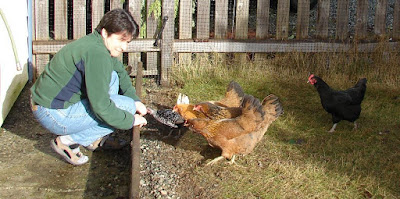
My chicken friends - see little Boeckem?
My chicken friends - see little Boeckem in front?
The thing was... before we went to southeast Asia, we spent five months on Salt Spring island, renting a cottage. Our landlord lived next door and raised chickens, which had free run of our fenced backyard.

I made friends with one little black and white cutie. She was smaller than the rest of the flock and I started going into the yard, turning over rocks and boards and showing her the feast of worms and bugs underneath. She very quickly came running when I called her name - "Boeckem!". Even when I was chopping wood, I'd find big centipedes and beetles and grab them up (with gloves) and call her to the fence. She'd come running and I'd quickly feed her my treasures. I say, quickly, because the rest of the flock soon figured out that she was getting preferential treatment and would also come running!

My argument for limiting our meat consumption to "happy chickens" therefore ran into the question... would I eat my little friend Boeckem. Maybe not... but what about her flock mates? I'm not a complete naive fading violet. I've gone fishing and caught/killed/eaten my own catch. Could I also raise chickens/rabbits and then say goodbye to them and have them nourish me? Good question. At this point, most of us are so disconnected from our food sources, particularly meat, that we don't have to ask these questions. Perhaps if we did... thinks might be different.

Like I said... after much discussion... we decided to go vegetarian. My partner had started a new, high-pressure job and I was left to fend for myself in terms of meal planning. My partner loved rice and beans and curry... we we basically subsisted on that, and veggies, for twelve months. It got really old... really fast. My energy went down... I developed an iron deficiency. My memories of that Road to Hanoi moment faded... A year later... we went back to eating chicken. And then some pork slipped back in. And fish... and even the occasional steak and burger. Did I mention that the scales grow back really fast?

Over the last seven years... we have talked repeatedly about reducing our meat consumption. Not just for the animals... but for ourselves as well. A diet high in meat is not the healthiest diet. Think high cholesterol, increased risk of heart disease, etc. On top of that... I know that the amount of agricultural land devoted to animal production is huge. If some of that land were converted to growing plant-based food... it would be huge. I know that the Amazon rain forests are being cut down to create more land for animal production. I know that the Pacific salmon fishery is in danger of collapse. I know all this and yet... the inertia to keep doing what we are doing is huge. "Oh look, pork tenderloin is on sale - $5/package and you get two tenderloins in a package!! Smoking deal!!" In many ways, it is easier to maintain the status quo than to move in the direction of something else. Procrastination at its finest - fear of the unknown... uncertainty about how to do it - better to stay right here and not move an inch.

Meatless Monday saves energy (it takes 11 times as much energy to produce the same amount of animal-based protein as plant-based protein)
Meatless Monday saves energy
(it takes 11 times as much energy to produce the same amount
of animal-based protein as plant-based protein)
At the same time, it is hard to argue with the fact that reducing meat consumption is:
  • better for my health
  • better for the animals
  • better for the planet
But... I love my meat... Argh! So, this is where Small Steps kicks in. I've heard of Meatless Mondays. It's one small step and we have been trying that since September. It's been working thanks to Mom's spinach pie recipe! We've recently upped our vegetarian meals to twice a week thanks to a lentil curry recipe. Every little bit helps...

I can see the writing on the wall... and I can taste my own hypocrisy. How can I claim to care about animals and the state of the planet when I still demand to be allowed the luxury of eating cheap factory-farmed meat? The production of which is completely at odds with what I profess to believe? A person can only live in that state for so long before it becomes untenable. We have reached that point... but that's another blog post or two.

How about you? Have you explored vegetarian options? Meatless Mondays? Gone full bore vegan? Tips, advice, thoughts, problems?